
The Student Who Opened the Solver Once
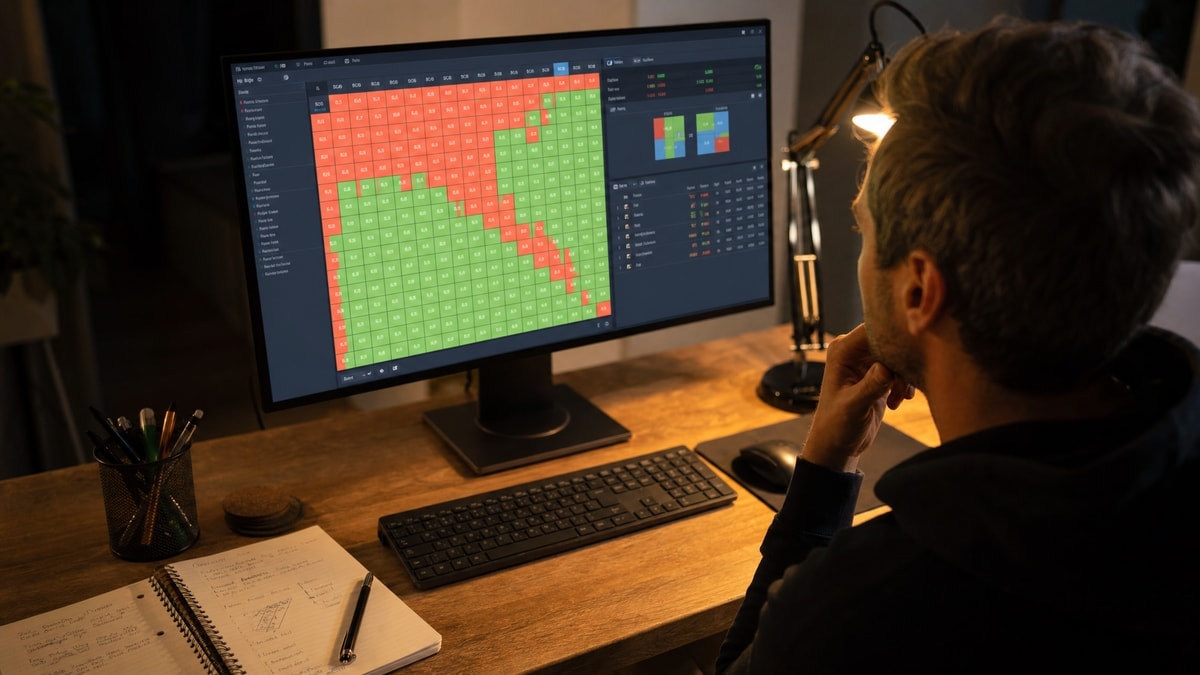
Every coach has produced this player. Call him the one-session solver user. He buys the software, runs a single spot, stares at a grid of red, green, and yellow squares that looks like a heat map of his own confusion, and never opens it again. The tool that was supposed to fix his game becomes a line item on a credit card statement.
That player is the reason the Octopi Poker My First Solver course exists. Octopi is rolling out a round of changes this October, and the headline addition is a beginner-focused course built to walk solver newcomers into GTO study. CEO Victoria Livschitz and coach Matt Hunt built it. The pitch is narrow: teach people how to use the thing before you hand them the thing.
The Beginner Problem Nobody Solved
Here’s the uncomfortable part of solver adoption. The software has been available to amateurs for years, and the learning curve hasn’t flattened much. A solver output is not a lesson. It’s an answer to a question most beginners don’t yet know how to ask. You can stare at an equilibrium range for a c-bet spot and still have no idea why the solver mixes a check and a bet at a given frequency, or what that tells you about the next street.
That gap is where training sites make their money, and it’s where the bottom of the market has been underserved. The default assumption in solver education is that you already understand equity, board texture, and bet sizing before you load your first simulation. Octopi is betting the opposite - that the first solver you ever touch should come with a map.
What We Actually Know About the Course
Let me keep this part honest, because the source material is thin. My First Solver is described as a course designed to guide solver beginners into GTO. It was created by Livschitz and Hunt. It will be available either as a standalone purchase or bundled into Octopi’s annual plans. That’s the confirmed set.
What I can’t tell you: the price of the standalone course, the price of the annual plans, the exact day in October it goes live, or how many people are enrolled. Octopi is also adding specialized lessons aimed at tournament players as part of the same rollout, though the specifics of that content aren’t public yet.
So the responsible framing is this: a known training brand is shipping a beginner-first solver course this month, from named people, on a familiar pricing model. The interesting part isn’t the feature sheet. It’s what the feature sheet signals.
The Market Has Been Moving This Direction
Octopi isn’t operating in a vacuum. The solver-tools segment has leaned toward accessibility and breadth rather than raw computational muscle. GTO Wizard added PLO5 solver tools to reach the five-card Omaha crowd. Other platforms have used gamified training and AI-assisted interfaces to make equilibrium study feel less like homework. The common thread: the easy growth in selling solvers to existing grinders is largely tapped. The next tranche of customers are people who’ve never opened one.
That’s a different product problem. Selling a faster solver to a pro is a spec war. Selling a first solver to an amateur is an onboarding problem, and onboarding problems are solved with courses, not compute. Octopi putting its CEO’s name on a beginner course reads as a company deciding where its next customers come from.
| Trend in solver tools | What it targets |
|---|---|
| More variants (PLO5, mixed games) | Existing solver users |
| Gamified / AI-assisted study | Intermediate learners |
| Beginner onboarding courses | First-time solver buyers |
Does the Beginner-First Bet Make Sense?
Here’s my read, flagged as opinion. The beginner-onboarding angle is the correct strategic call, and it’s harder to execute well than it looks.
The risk is that a beginner solver course becomes a repackaging of concepts that live for free on YouTube, dressed up with a login. The value, if there is any, is in the sequencing. A good first-solver course doesn’t teach you solver outputs; it teaches you the handful of questions a solver can actually answer, and the order to ask them in. If Livschitz and Hunt nailed that structure, the course earns its keep. If they just recorded someone clicking through sims, it won’t.
Since other open question is whether beginners should be studying solvers at all before they’ve locked down fundamentals like pot odds and position. There’s a defensible argument that a player leaking money from basic positional mistakes gets a worse return on solver time than on a bankroll and a rules refresher. A course that acknowledges that - that tells some buyers to come back later - would be more credible than one that doesn’t. We won’t know which version Octopi built until people work through it.
Back to the One-Session User
Which brings me back to the player who opened his solver exactly once. The honest question for My First Solver, and for the whole beginner-onboarding wave it represents, is simple: does this get that player to session two?
The data doesn’t exist yet, so I can’t answer it. What I can say is that the industry has correctly identified where the failure happens. Solver drop-off isn’t a pricing problem or a software problem. It’s a translation problem - turning a grid of frequencies into a sentence a human can act on at the table. Octopi is the latest to take a swing at it, with named coaches and a bundled-or-standalone model, arriving this month. For anyone who’s been circling solver study and bouncing off the first screen, there’s now a concrete option to evaluate when it lands.


