
PokerStars on FanDuel plans a dual-market Dynasty Series
PokerStars on FanDuel is launching a September Dynasty Series that runs across both the United States and Ontario, with more than 160 individual events scheduled between the two platforms. The US portion carries at least $3.5 million in guarantees across roughly 100 events, while the Ontario platform is set to feature 60-plus tournaments, according to PokerFuse.
The operator has confirmed those top-line numbers but says some details of the series will be revealed in the coming week, meaning buy-ins, exact dates, and the full guarantee breakdown remain outstanding. For players in both markets, the headline is straightforward: a major new tournament calendar is arriving, and it is being run on parallel tracks across two jurisdictions.
Two markets, one series
Branding a US series and an Ontario series under the same Dynasty banner is the part worth pausing on. These are separate regulated pools with separate liquidity, and nothing in the announcement suggests shared prize pools between them. What it does suggest is a unified product and marketing approach - the operator treating its two North American footprints as one story rather than two.
That framing matters because the rollout of PokerStars on FanDuel has been rocky. The platform migration and launch drew software complaints, and the Ontario transition hit repeated delays. A synchronized Dynasty Series reads as an attempt to shift the conversation from technical stumbles back to product and value.
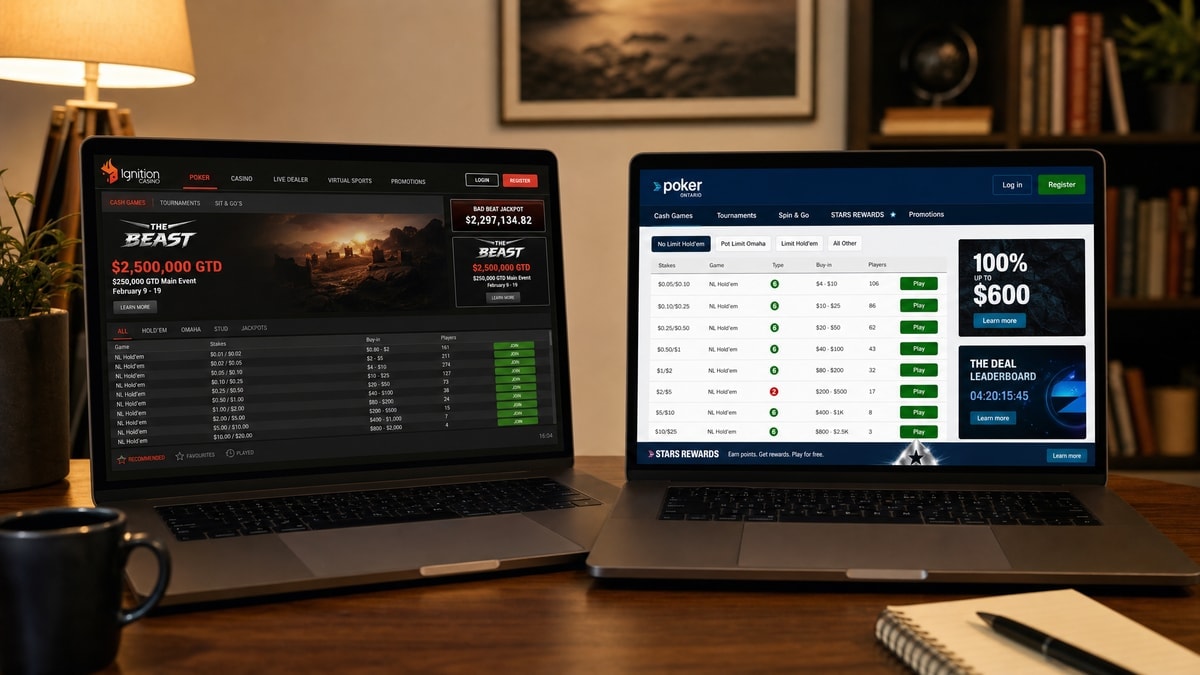
The scale reinforces that read. Building a 100-event schedule in the US and a 60-plus-event schedule in Ontario at the same time is an operational commitment, not a promotional teaser. It requires structures, guarantees, and support in two jurisdictions concurrently - the kind of investment an operator makes when it believes the underlying platform can carry the weight.
What $3.5 million across 100 events tells us
The US guarantee figure invites comparison to the operator’s earlier efforts on the platform. Against those benchmarks, $3.5 million across roughly 100 events points to a lower average guarantee per tournament - a schedule built for breadth rather than a few marquee prize pools.
That is a defensible design choice in these markets. US online poker liquidity is fragmented across a handful of states, and stretching guarantees too thin per event is how operators end up paying overlays. Spreading $3.5 million across 100 smaller events lowers the exposure on any single guarantee and gives the schedule a better chance of filling. The trade-off is a lower ceiling on headline numbers - a reasonable price for protecting margins while player pools remain limited.
The Ontario side is harder to read without a guarantee figure attached, and I won’t guess at one. What can be said is that a 60-plus-event schedule in a single province is a substantial commitment, and it positions the platform against a market where GGPoker’s traffic surged during PokerStars’ migration downtime. Winning that liquidity back is a real competitive challenge, and a full series is a logical instrument for it.
The competitive context
Step back and the timing looks deliberate. Regional US operators have been aggressive, with BetRivers building a multi-state series business. A wave of overlays across US operators has underscored how thin these player pools are, and any series announced into that environment will be graded on whether it meets its numbers, not just on the promise. For a full picture of the platform, our PokerStars review and FanDuel Poker review lay out where each stands today.
That is the metric worth watching when the Dynasty Series concludes. The guarantee is the promise; the overlay - or absence of one - is the result. If PokerStars on FanDuel can run 160-plus events across two markets and hit its guarantees cleanly, that is a more meaningful signal about platform health than any launch-day announcement. If overlays pile up again, it reinforces the concern that the branded product is still fighting to rebuild the liquidity it once had.
The strategic subtext is the dual-market coordination itself. Running the two markets in lockstep lets the operator spread marketing, structures, and product work across a larger combined audience, whether or not the pools ever share liquidity.
What players should do now
For now, the practical move is to wait for the schedule and read it closely. The confirmed facts give shape but not detail: 160-plus events, at least $3.5 million in US guarantees across about 100 tournaments, and 60-plus events in Ontario. The buy-ins, the dates, the ITM structures, and any headline event are still to come in the operator’s own words, and anything beyond those confirmed numbers is speculation until the full release lands.
Newer players weighing whether to jump in should pair that schedule read with the basics - sound bankroll management matters more in a broad, lower-guarantee series than chasing a single big number, because the value here is in volume. Experienced grinders in both markets will know the drill: find the soft events, watch for the ones most likely to overlay, and build a plan around them.
The larger point is that PokerStars on FanDuel is no longer treating the US and Ontario as separate problems. It is running them as a single campaign - and the Dynasty Series is the first real test of whether that approach can convert stated ambition into filled tournaments.


