
The threat isn’t your opponents’ skill this time
Most poker security stories are about someone with an edge you can’t see across the table. This one is about an edge inside your own machine. According to PokerFuse’s The Rail, an online poker software scam has surfaced affecting players across GGPoker, CoinPoker and WPN. GGPoker is reportedly sending warnings to affected players. If you run third-party tools alongside your client, that’s worth more attention than any bad beat.
My take is straightforward: this reads as a supply-chain problem in a poker context, and the response you control matters more than the response the operators control. The reported vector is trojan software running on players’ machines without their knowledge. A site can warn you about that, but it can’t reach into your desktop and fix it. You have to.
What’s confirmed, and what isn’t
Worth separating signal from noise here, because in a story like this the noise multiplies fast.
What PokerFuse reports as fact: a scam is affecting players across GGPoker, CoinPoker and WPN, and GGPoker is warning affected players. Two third-party tools, Jurojin and IntuitiveTables, may be affected by the exploited software packages. PokerFuse points readers to a breakdown from Poker Listings and to a warning thread aimed at online poker players about trojan software running silently. Joey Ingram has weighed in.
What isn’t established: how many players were hit, the exact mechanism of the trojan, whether any funds moved, and the precise official language from any of the three operators. And “may be affected” is doing real work in that Jurojin and IntuitiveTables line. There’s a meaningful difference between a tool being compromised at the source and a tool being impersonated by a look-alike installer. Both produce headlines; only one is the tool’s fault. Until that’s confirmed, treat both names as flags for your own audit, not verdicts.
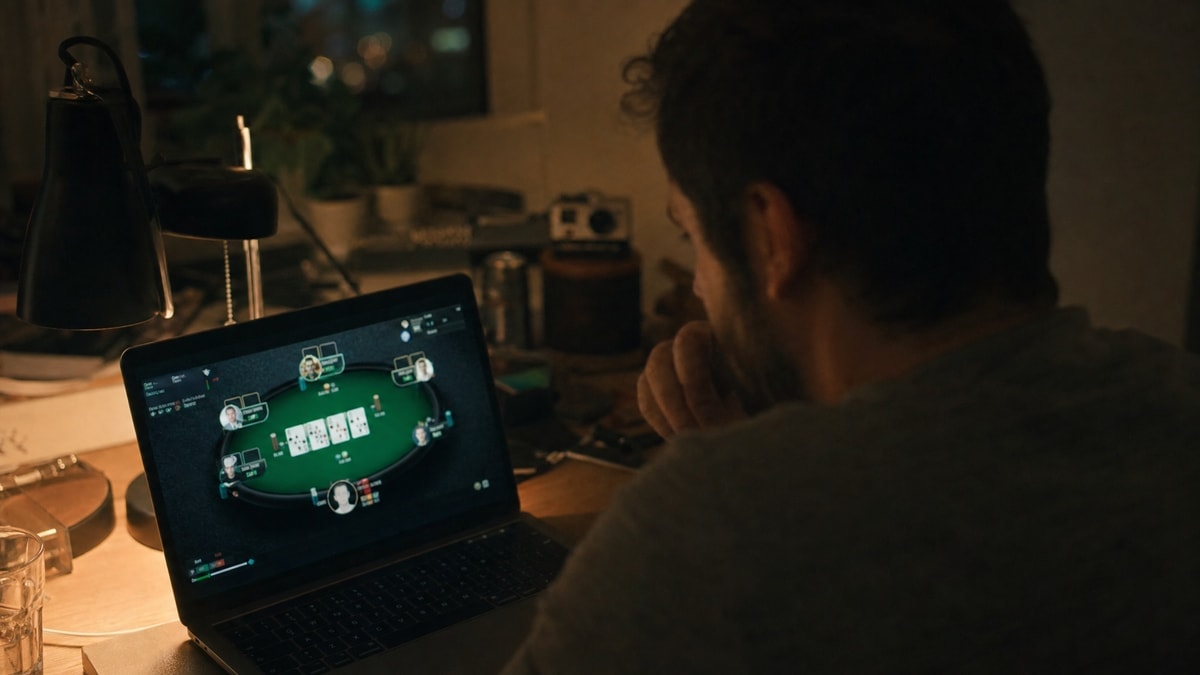
Why the three-site spread is the interesting detail
What I keep circling back to. GGPoker, CoinPoker and WPN don’t share a client, a network, or, for the most part, a player pool. GGPoker runs its own ecosystem, CoinPoker is a crypto-native room, and WPN is the Winning Poker Network. Three unrelated platforms surfacing in the same warning suggests the common thread almost certainly isn’t the sites. It’s something players on all three tend to install around the client.
That points toward a third-party tooling problem rather than a platform breach, which is the same structural reason the poker world has been jittery about client-side software before. When real value sits behind a login, attackers follow it, and that’s doubly true for rooms handling crypto.
The uncomfortable part for the tracking-and-tooling crowd: the tools that make you better are also attack surface. A HUD, a table manager, a hotkey utility, any of it, runs with access to your poker environment. That’s not an argument against tools. It’s an argument for treating their installers and updates with the same suspicion you’d apply to an email promising you a free WSOP seat.
The counterargument: operators can’t fix your desktop, so why panic?
The fair pushback is that a warning is not a confirmed loss, and no dollar figures have been established. Correct, and I won’t inflate a medium-confidence report into a catastrophe. We don’t know how many accounts were touched or whether money left anyone’s bankroll.
But the absence of confirmed losses is a weak reason to relax when the reported vector is software running silently. The point of a trojan is that the damage precedes the discovery. The rational response to an uncertain but low-cost-to-mitigate threat is to mitigate it. If you play on any of the three sites named and run third-party tools, a practical checklist tonight looks like this:
| Action | Why it matters |
|---|---|
| Reinstall tools only from the official source | Kills look-alike installers |
| Change your poker account passwords | Limits damage from anything already resident |
| Enable two-factor authentication where offered | Stops account access even with stolen credentials |
| Watch for GGPoker’s warning to your account | Reported to be going out to affected players |
| Run a reputable malware scan | Surfaces silent processes |
None of that requires you to know the exact mechanism. It requires you to accept that the cost of caution is an hour, and the cost of ignoring it is unknown.
The lesson underneath the headline
Strip away the specific names and this scare is a reminder that online poker’s security perimeter extends past the site you’re logged into. You can pick a well-run operator and still get burned by the utility you installed to shave two seconds off your table selection.
So the takeaway isn’t to stop using tools or to walk away from these three sites. It’s that the trust you extend to your poker client should be a tighter circle than the trust you extend to everything you bolt onto it. Verify sources, watch for that GGPoker warning, and audit what’s actually running on the machine where your money lives.


